
FIELD NOTES
MMA Shorts vs Training Shorts: What Should You Compare?
The name on a product page is only a starting point. Compare clothing rules, construction, fit and care before choosing training shorts.
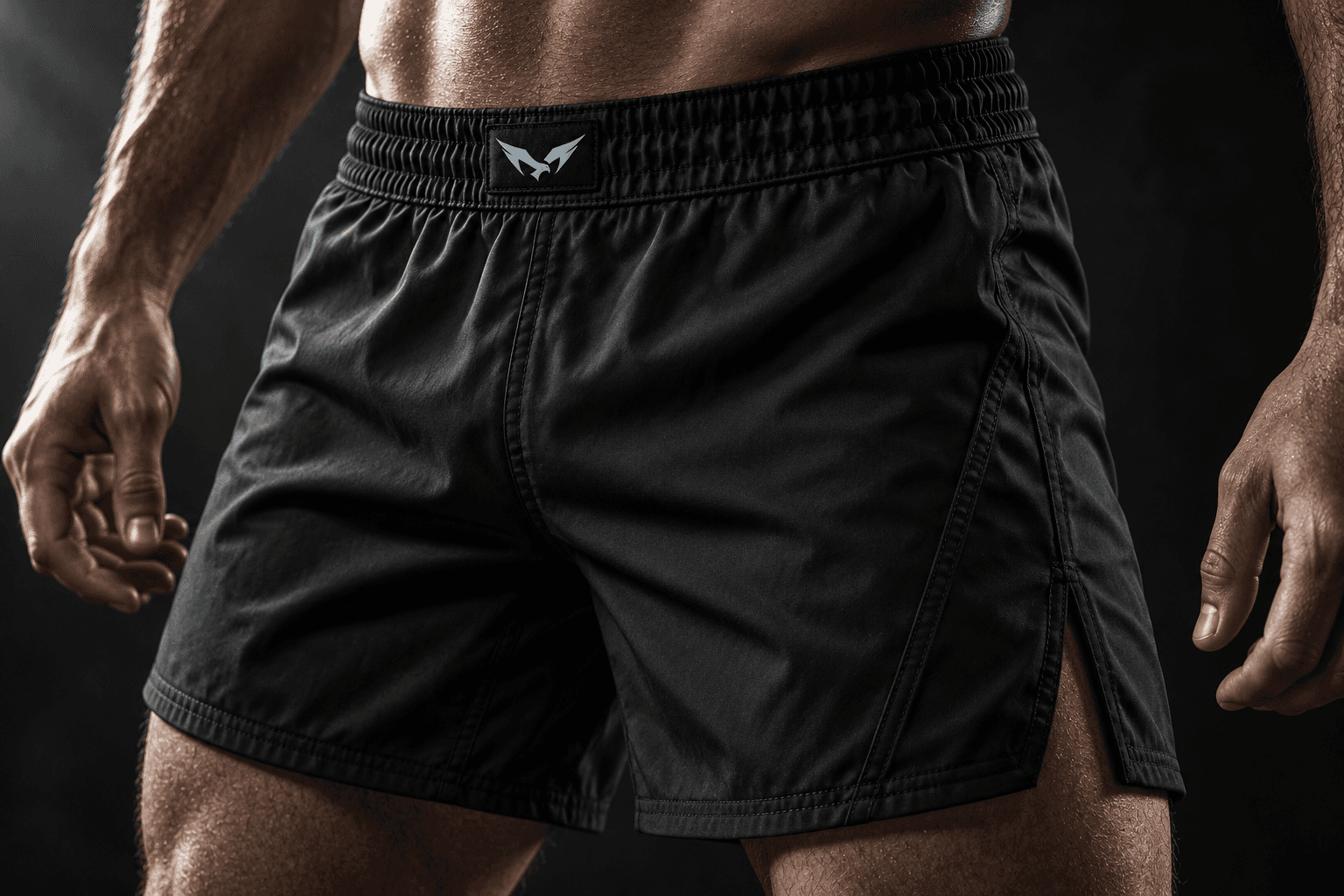
The useful difference between MMA shorts and general training shorts is whether the specific garment meets the requirements of your session. Compare the rules, construction, fit and care information. Neither product name, on its own, confirms that shorts are suitable for contact training or competition.
This is a general comparison guide. The MMA Shorts catalogue will come later; no future product is being presented here as competition approved.
Start with the activity rather than the label
“Training shorts” is a broad description. Before deciding whether a pair works for you, identify the activity: conditioning, technique practice, partner drills, grappling or a sanctioned bout.
Ask your coach or organizer about the clothing requirements for that setting. A pair you use for a solo workout should not be assumed suitable for a different session simply because both activities happen in a gym.
Likewise, the words “MMA shorts” cannot replace an event's clothing inspection or its rules. The exact construction still needs to be checked.
Inspect pockets and fasteners
Check the description and photographs for pockets, zippers, closures and anything else the organizer asks you to avoid. If an important detail is not visible, ask the seller rather than assuming it is absent.
The ABC's published MMA attire rules provide a concrete reference: they exclude pockets, zippers and exposed hook-and-loop fasteners from fighting shorts or trunks. The trunks must not extend below the knee. See the ABC's published Unified Rules.
That reference is a rule example, not universal approval. Check the ABC's current document index and confirm the version adopted by your own event or commission. Other sports and individual gyms may use different requirements.
Compare the actual fit information
Do not assume a pair described as MMA shorts will fit closer or provide more room than every pair described as training shorts. Read the size chart and construction information for the actual styles.
Useful questions include:
- Does the chart list body measurements or garment dimensions?
- How is the waistband measured?
- Is the inseam or overall length supplied?
- Is there a lining, and is its construction explained?
- What does the seller advise if you fall between sizes?
Your preferences also matter. Describe the waistband feel, coverage and movement you need instead of relying only on a familiar size letter. Our measurement guide can help you prepare those details.
Read material and care details separately
A category name does not establish fiber content, stretch, drying speed or durability. Look for clear product specifications and evidence behind any performance claim that affects your decision.
Care also belongs to the specific garment. Follow its washing, drying and warning instructions rather than a routine borrowed from another pair. FTC guidance explains that care directions need a reasonable basis and must account for the garment's components. Read the FTC care-label guidance.
Make the comparison practical
Choose the pair that you can verify for your intended use: allowed construction, understandable sizing, appropriate fit and care instructions you can follow. If either product page leaves a critical question unanswered, ask before ordering.
The strongest comparison is specific. Compare two real garments against the requirements of your session, rather than deciding that one broad category is automatically better for every kind of training.